Film and productionDare to move.

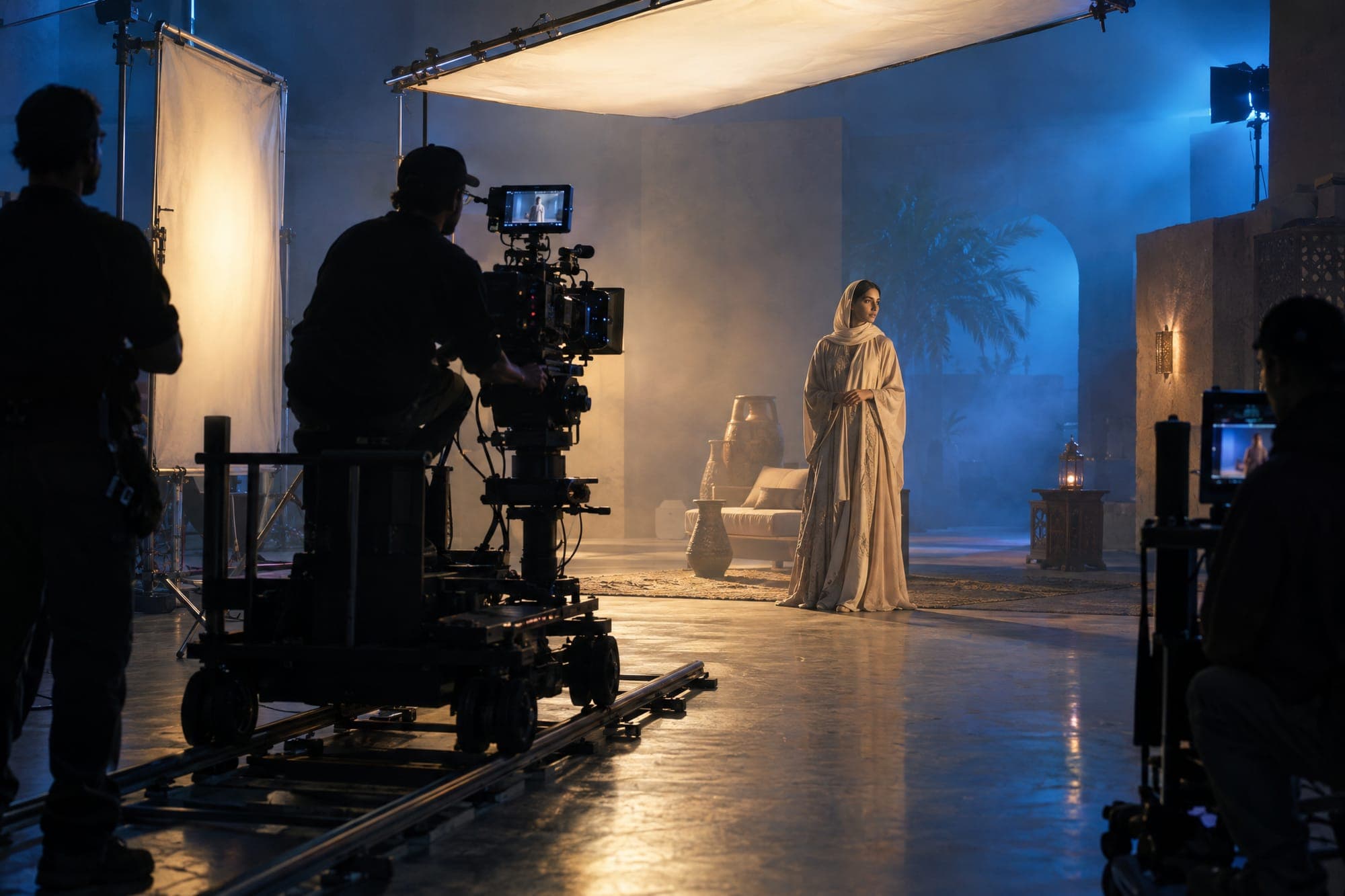
Film crew lighting a scene on a studio set with a soft cinematic grade

What is Film and production at AI-DARE?

AI-DARE's film and production service creates brand films, TV and digital commercials, social video, photography and post-production for brands in Qatar and the GCC. Every production starts from a creative idea, is shot with a cinematic grade, and is delivered in the Arabic and English versions and formats each platform needs.

What you get

  • Brand films and manifesto films that tell what the brand stands for
  • TV, cinema and digital commercials, from script to final master
  • Social video shot natively for vertical formats, with cutdowns for every platform
  • Campaign, product, portrait and architectural photography
  • Post-production: edit, colour grade, sound design, motion graphics, Arabic and English voiceover and subtitles

How it moves

  1. 01

    Idea and script

    Every film starts with an idea worth filming. We write the script or treatment in Arabic and English and use AI pre-visualisation to show how it could look before anyone books a crew.

  2. 02

    Pre-production

    Casting, locations, permits, wardrobe, schedules and shot lists are locked before the shoot. Every version and format you need is planned now, so the shoot captures it.

  3. 03

    Shoot

    Real people, real places, real light. We shoot for the cinematic grade the brand needs, with vertical and horizontal frames covered on set rather than cropped later.

  4. 04

    Post and delivery

    Edit, grade, sound, voiceover and subtitles in both languages, then delivery of every master and cutdown, named and organised for each platform and media owner.

How does video production work in Qatar?

Video production in Qatar follows five stages: idea, script, pre-production, shoot and post-production. Pre-production is where local knowledge matters most: securing permissions for public locations and drones, casting from a diverse population, choosing the right Arabic voice, and scheduling around heat, prayer times and the season.

Filming in public places and flying drones in Qatar both need permission from the relevant authorities and location owners, so we build approvals into the schedule from the start rather than discovering them on shoot day.

Light and heat shape the plan. Between late spring and early autumn, outdoor shoots work best at dawn and in the hour before sunset, and crews need shade and water planning. Interiors and studio days fill the middle of the day.

Casting needs care and respect. We cast real people who reflect the audience, agree wardrobe and on-camera expectations clearly with talent in advance, and follow local norms on filming families, children and public spaces.

What is the difference between a brand film and a commercial?

A commercial sells something specific in a fixed length, usually 15 to 60 seconds, with a clear call to action. A brand film tells people who you are and why you exist, often runs longer, and earns attention through story rather than offer. Many campaigns need both: the film builds meaning, the commercials convert it.

Brand films work well for launches, rebrands, anniversaries, recruitment and investor or government audiences. They tend to live on the website, YouTube, LinkedIn and at events.

We often shoot both from one production: the long film and a set of short commercials and social edits, planned in the shot list so nothing feels like a leftover.

How do you make video for TikTok, Instagram and Snapchat?

Shoot vertical from the start, put the hook in the first seconds, and design for sound off with on-screen text, while still using sound well for people who listen. Each platform rewards a different rhythm, so one horizontal ad cropped to 9:16 rarely performs. We plan social edits in the shot list, not in the edit suite.

Native-feeling content often outperforms polished ads on these platforms, but native does not mean careless. We direct creator-style content with the same idea and grade as the main film so the brand stays recognisable.

In the GCC, platform choice depends on the audience. Snapchat is especially strong with younger audiences in Saudi Arabia, TikTok and Instagram reach broadly, and YouTube still matters for longer viewing.

Should our video be in Arabic, English or both?

It depends on who must act on it. For Qatari and Gulf audiences, government stakeholders and national moments, lead with Arabic. For a broad resident audience, English with Arabic subtitles, or two separate language versions, usually works better. Subtitles alone rarely replace a properly recorded voiceover written for each language.

Within Arabic there is a choice too. Modern Standard Arabic suits formal, institutional and pan-Arab work. A Gulf dialect voice can feel closer and warmer for consumer brands, as long as it matches the audience and the brand's tone.

We write Arabic scripts as original copy, cast voices with care, and time subtitles properly for right-to-left reading.

Questions, answered.

What affects the cost of a video production in Qatar?

The main factors are the number of shoot days, crew size and equipment, locations and permits, cast and usage rights, art direction and props, post-production complexity, music licensing and the number of versions and languages. A clear script and shot list is the best cost control. We quote against a defined treatment, not a guess.

Do you handle filming permits in Qatar?

Permits are part of our pre-production plan. We identify which locations, drone shots and public scenes need approval, prepare the paperwork with location owners and the relevant authorities, and schedule around approval times. Some locations, such as malls, hotels and private properties, have their own rules, so we confirm each one before the shoot is locked.

Can you shoot in other GCC countries?

Yes. We plan productions for brands across the GCC, including Riyadh, Dubai, Abu Dhabi, Kuwait City, Manama and Muscat. Each country has its own permit process, crew rules and cultural expectations, so we plan them per market. When a campaign covers several countries, we design the shoot so one production can serve all of them where it makes sense.

Do you use AI in film production?

Yes, as a tool, not as the look. We use AI for storyboards, pre-visualisation, mood films and some post-production tasks such as clean-up and versioning, so you can judge the idea before the shoot. People on screen are real people. We do not use fake generated faces, and generated frames never carry text, logos or packaging.

Who owns the footage, music and talent rights?

Ownership of footage and finished films is agreed in the contract. Music and on-screen talent are licensed separately for a defined territory, duration and set of media, such as social only or TV and digital. We set these terms before the shoot so you know exactly where and for how long you can use the work, and what renewal would involve.

How many versions and formats do we receive?

Exactly what the media and channel plan needs, agreed before the shoot. A typical package includes a master film, shorter cutdowns, vertical, square and horizontal versions, Arabic and English voiceover or subtitles, and stills from the set. Planning versions early is cheaper than creating them afterwards, and it keeps every format looking intentional.

Your safe idea has already been made.

Tell us the other one. A human replies on WhatsApp, fast, with one question back.